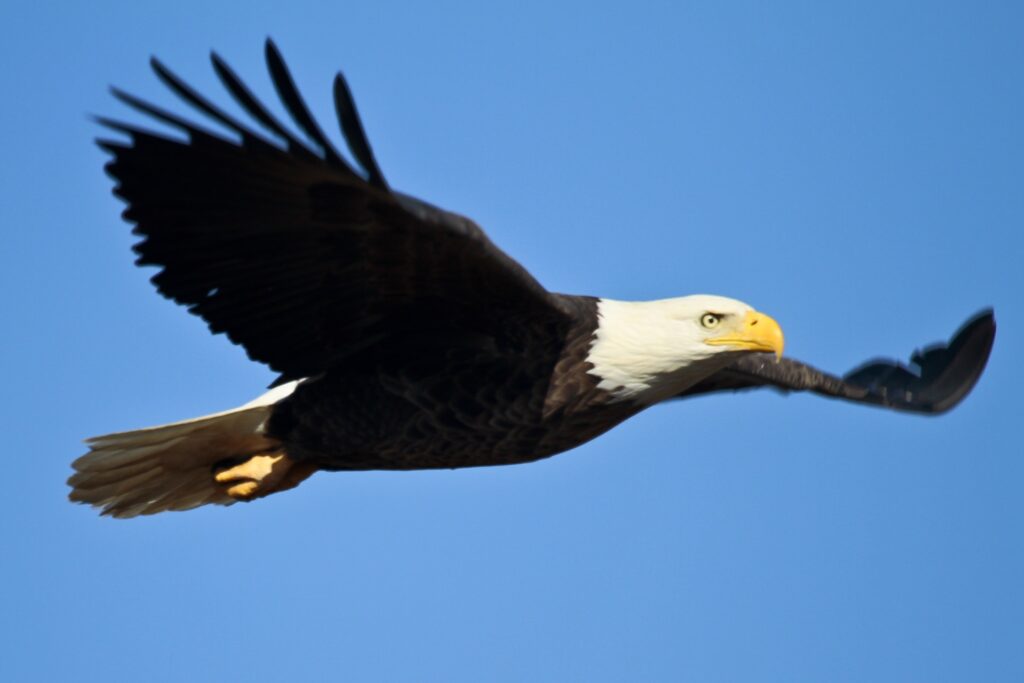
When we say something is “Native,” we are saying that something originates from a given area. For example, our first bird on our Native list is the Bald Eagle, which means the Bald Eagle originates from or inhabits the Petty Island area. Indeed, sightings of Bald Eagles have been confirmed.
Birds
Bald Eagle
Bald Eagles can be found throughout North America, including the Alaska region, although they also inhabit parts of Canada and Mexico. Their wingspans can range anywhere between 5 to just over 7 feet; females are slightly larger than males by just around 25%, a common trait seen in the animal kingdom. Their diet may include Fish, small mammals such as rabbits or squirrels, snakes, crabs, and other small birds.
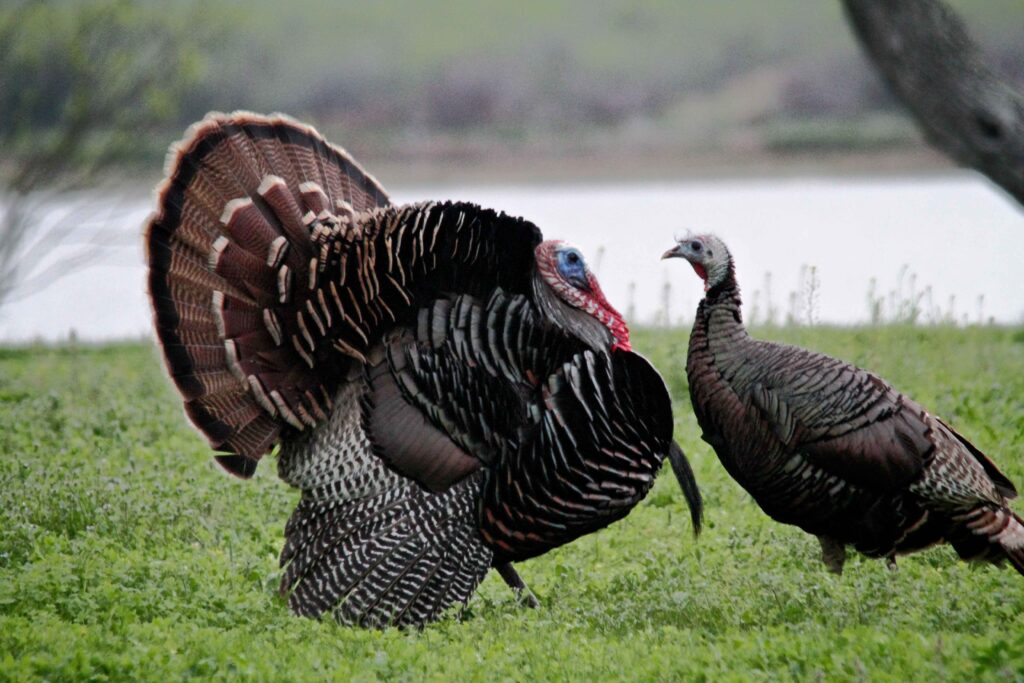
Wild turkeys, like bald eagles, can be found in North America; however, they prefer wooded areas like woodlands and forests, and areas with a water source. They will forage for foods like berries, acorns, pecans, Hickory nuts, and sometimes feast on small animals like beetles and worms. Their wingspans, although not as large as the Bald eagle, still come in at an impressive 5 feet. If you take a look at the picture on the right, you’ll notice that the males have more prominent and colorful plumage, along with having a red snood, which is not found on females.
Male (left) and Female (right) Wild Turkey
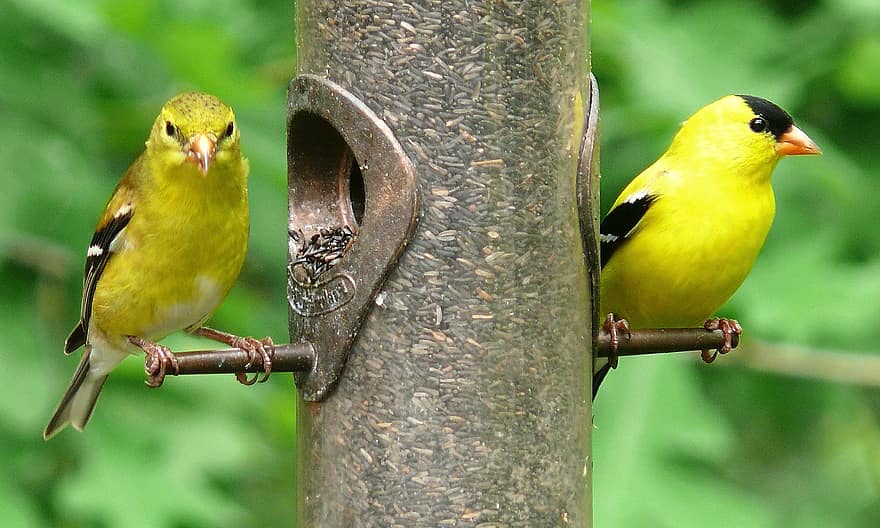
Female (left) and Male (right) Goldfinch
The American Goldfinch, best known for being the New Jersey state bird, comes in with a short 19 cm to 22 cm wingspan. Although tiny, they still maneuver like pros; they’re easily identified by their bright yellow body with their white and black wings. For females, the only thing that changes is their coloration, where female Goldfinches have a more dull grey/brown body. Like their size, their diet isn’t quite large, consisting mostly of seeds and plants. They are usually found in areas like grasslands, forests, and suburban areas alike, flying in a unique wave-like pattern, flapping their wings to lift themselves before folding them back and diving in an arch before flapping to lift themselves again.
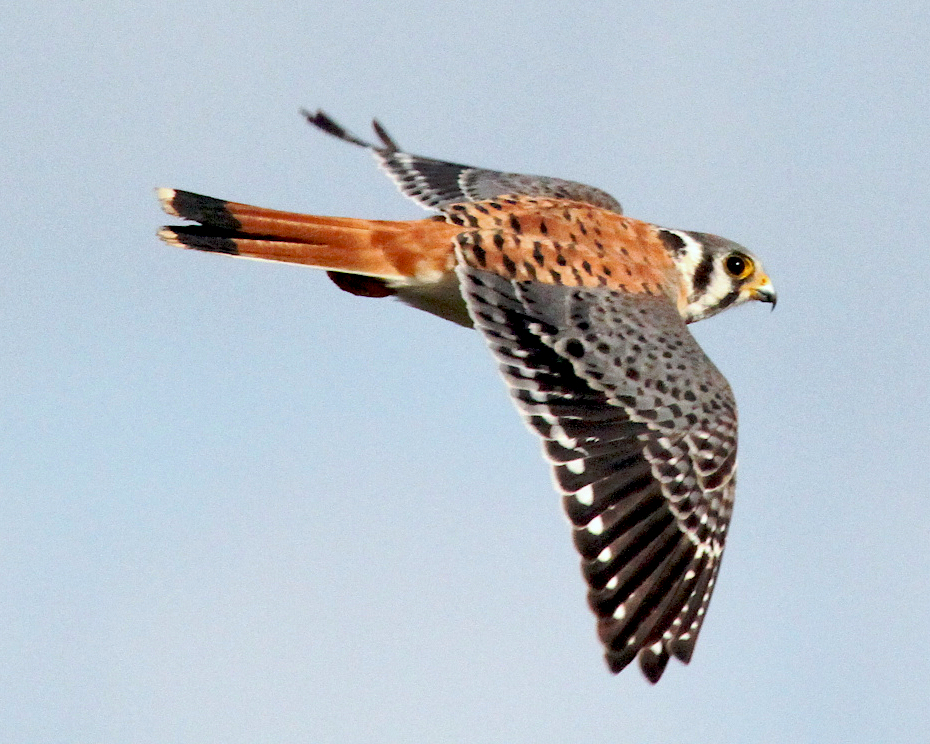
The American Kestrel has a wingspan range from 20 inches to 24 inches. They will feed on small animals like beetles, spiders, frogs, mice, and other small birds. They are best identified by their red-ish orange back and their grey plumage. Females have a red hue all over compared to the grey found on males. Similar to other birds in this category, they are found in grasslands, meadows, and sometimes desert areas.
Male American Kestrel
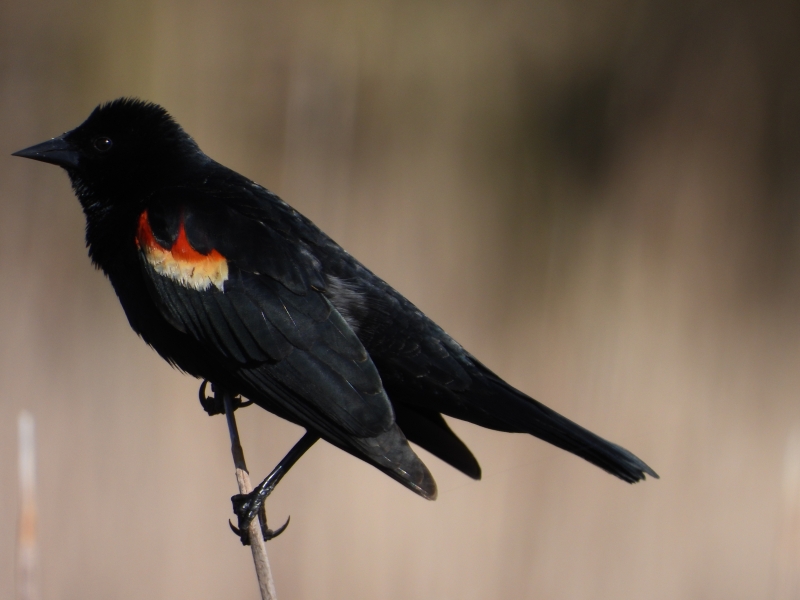
Male Red-winged Blackbird
The Red-winged Blackbird is a fun find while outdoors, easily marked by the bright red spot on their wing against its black feathers. Its wingspan can reach up to 40 cm, and it will feed on smaller insects, like beetles and grasshoppers, along with fruits and seeds. They can be found in marshes, swamps, and meadows. Males will have a bright red spot on their wings, while females keep a mix of black, brown, and grey plumage covering their bodies. Males will also sing before breeding in order to attract a female, and in some cases chase females with their shoulder feathers raised.
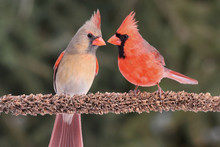
The Northern Cardinal’s wingspan can reach from about 9.8 inches to just above 12 inches. They’ll feed on small insects such as beetles and crickets, invertebrates like spiders, and a variety of berries and seeds. Male cardinals will have bright red plumage all over with a black area near the beak, whilst females are a dull grey-brown in comparison. They can be found in wooded areas like forests, wetlands, or near human populations in parks and gardens. They gather in flocks usually upwards of about 60 to 70 in the winter to forage and feed together in densely vegetated areas, along with bushes and trees.
Female (left) and Male (right) Cardinals
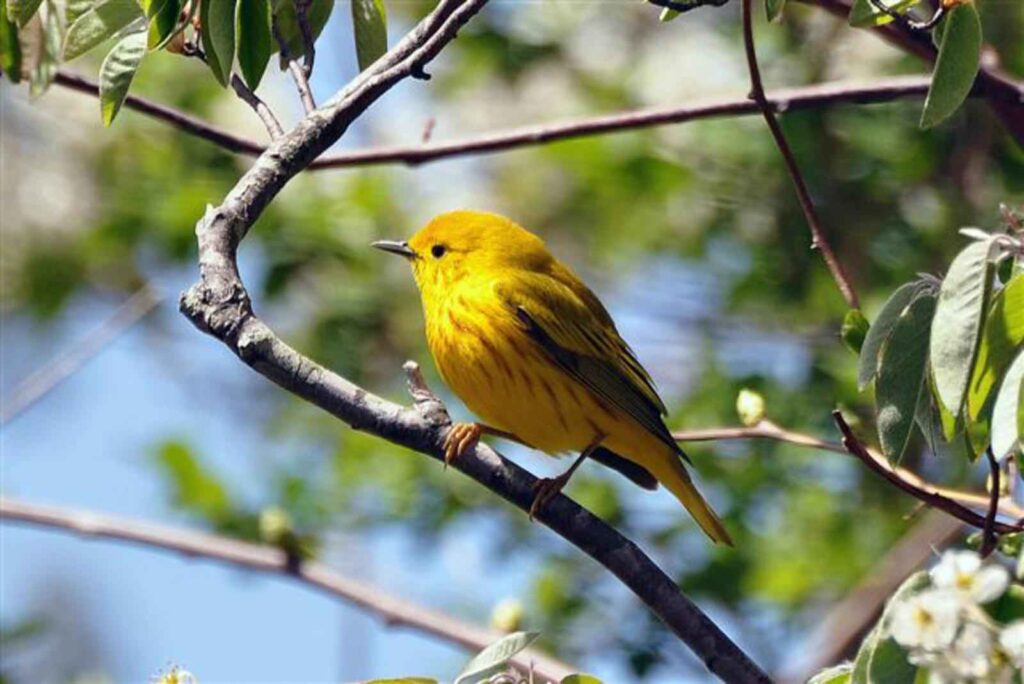
Yellow Warbler
The Yellow Warbler is a bright yellow bird with a wingspan usually between 16 and 22 centimeters. They’ll commonly eat small insects, some smaller invertebrates, and nearby berries and fruits. Yellow warblers are also important in controlling certain insects in their environment that we consider pests. You’ll find warblers mostly in places with a good combination of trees and water sources, so forests, wetlands, mangroves, etc., if they have both, you’re likely to find them. Females will have red stripes on their chest, while males will not, keeping a yellow coat all over.
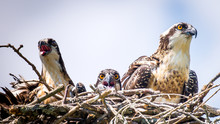
The mighty Osprey is a mesmerizing sight with a 17-inch wingspan and fearsome plumage. These amazing birds can usually be found anywhere that has a body of water with fish in it, so your rivers, marshes, and wetlands are a great place to look. They mostly feed on fish, which makes up 99% of their diet; however, they will sometimes feed on small rodents, rabbits, smaller birds, and some reptiles. Males and Females look very similar; however, if you look closely at their chests, females have spots of brown plumage while males have a solid white chest.
male (left) and female (right) Ospreys
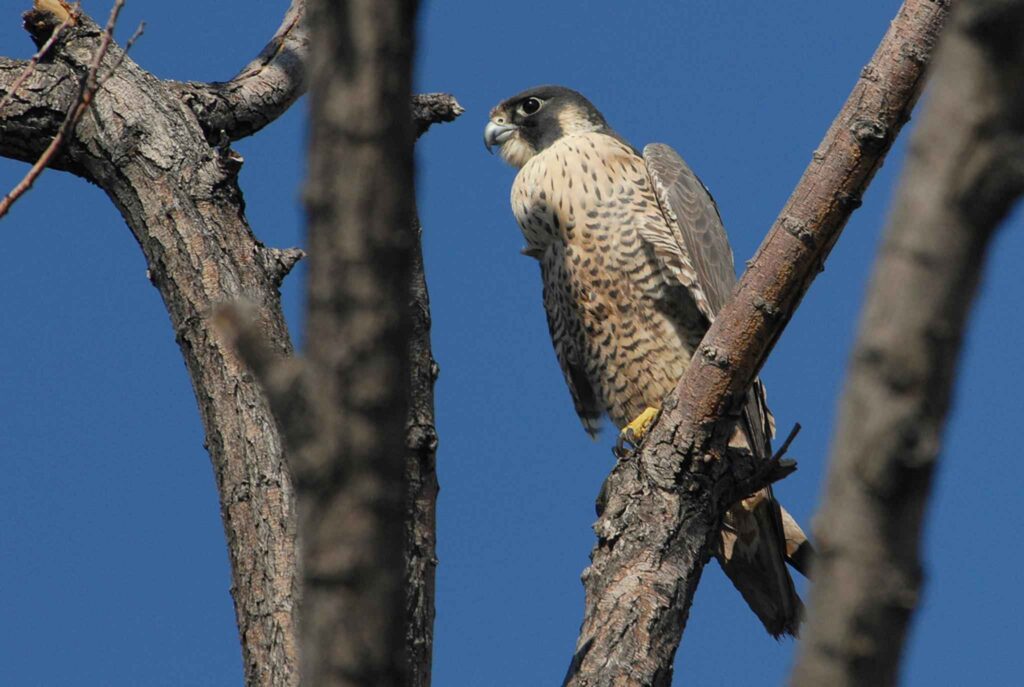
Peregrine Falcon
The incredible Peregrine Falcon is a force of bird nature, with a wingspan that can reach between 29 to 47 inches, which helps them reach speeds over 200 mph. Peregrine’s will feed on medium-sized birds, commonly such as pigeons, doves, waterfowl, and songbirds, whilst sometimes also hunting for smaller mammals like mice, bats, and shrews. They are also the most widespread bird, found in every part of the world except Antarctica, some of this is a result of their speed, adaptability, and diet. To tell whether one is a female or male, simply look at their chest; females have dark spots scattered around, while males do not.
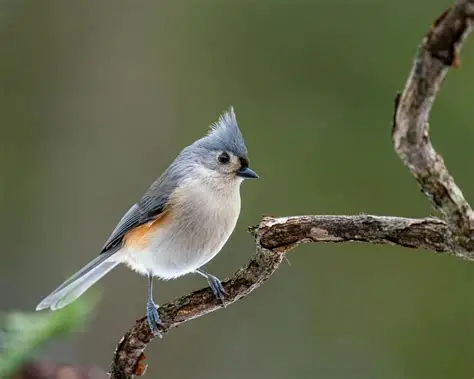
The Tufted Titmouse, although small, has a wingspan between about 7.9 and 10.2 inches. They’ll feed on berries, nuts, seeds, and smaller insects like beetles, ants, and sometimes caterpillars. You can find these little guys near forests, suburban areas, and agricultural areas. Both females and males look very similar, so it is hard to tell them apart by just looking at them; however, it is believed that the black patch above their beak is more noticeable in male Titmouse.
Tufted Titmouse
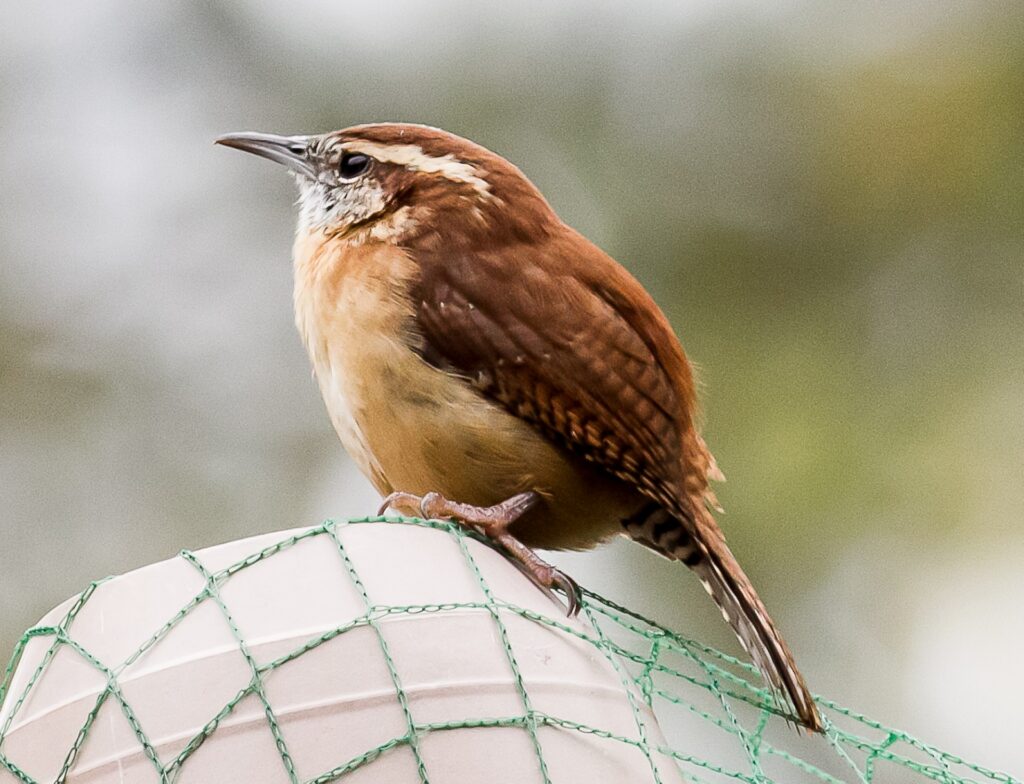
Carolina Wren
The Carolina Wren enters our catalog with a wingspan of 29 cm, feeding on a variety of foods from invertebrates like beetles, grasshoppers, and spiders to small lizards and tree frogs. On occasion, they will also feed on vegetables, fruit pulps, and seeds. They can be seen in places with many trees, like forests or woodlands, but they also live in suburban and agricultural areas. Although both female and male Wrens look similar, males are more often described as more vibrant in comparison to females.
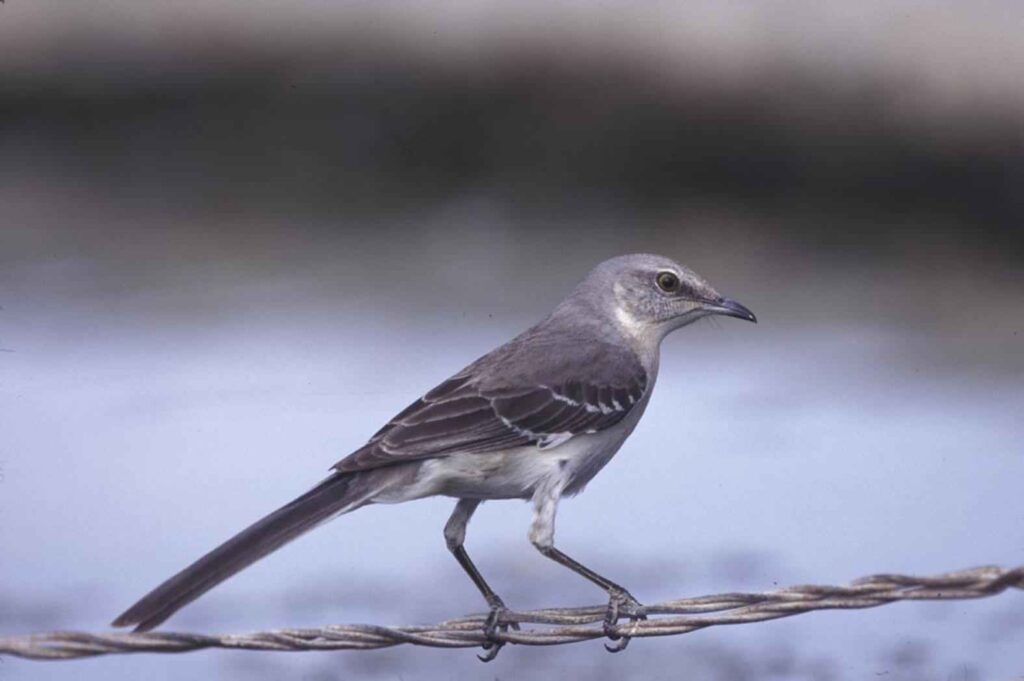
Northern Mockingbirds can have wingspans between 12 to 15 inches in length; they will normally feed on small insects, earthworms, fruits, seeds, berries, and sometimes small lizards. They can be found in grasslands, suburban areas, and woodlands. They’re resourceful birds that will even drink sap out of trees if available. It is a difficult task to differentiate males from female mockingbirds, but males are noted to have more prominent details.
Northern Mockingbird
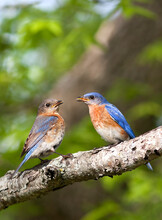
Female (left) and Male (right) Bluebirds
The Eastern Bluebird has a wingspan ranging from 9 to about 12.6 inches; however, the real showstopper is its beautiful blue feathers. Did you know blue is considered a rare color found amongst animals and plants? The bluebird may feed on insects like caterpillars, butterflies, and grasshoppers, along with their larvae. They are also known to eat berries, earthworms, spiders, and other invertebrates. You can find them near woodlands, meadows, and suburban areas.
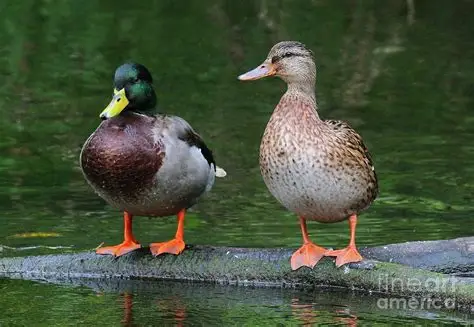
The amazing, well-known Mallard can have a wingspan of anywhere from 32 to 39 inches, and they feed on both vegetation and insects. They’ll feed on insects such as beetles, worms, and grasshoppers while still feeding on algae, waterlilies, wheat, and so on. They are commonly found by lakes, ponds, parks, anywhere with a body of water, generally with some exceptions, and in urban areas near human populations.
Female (left) and Male (right) Mallards
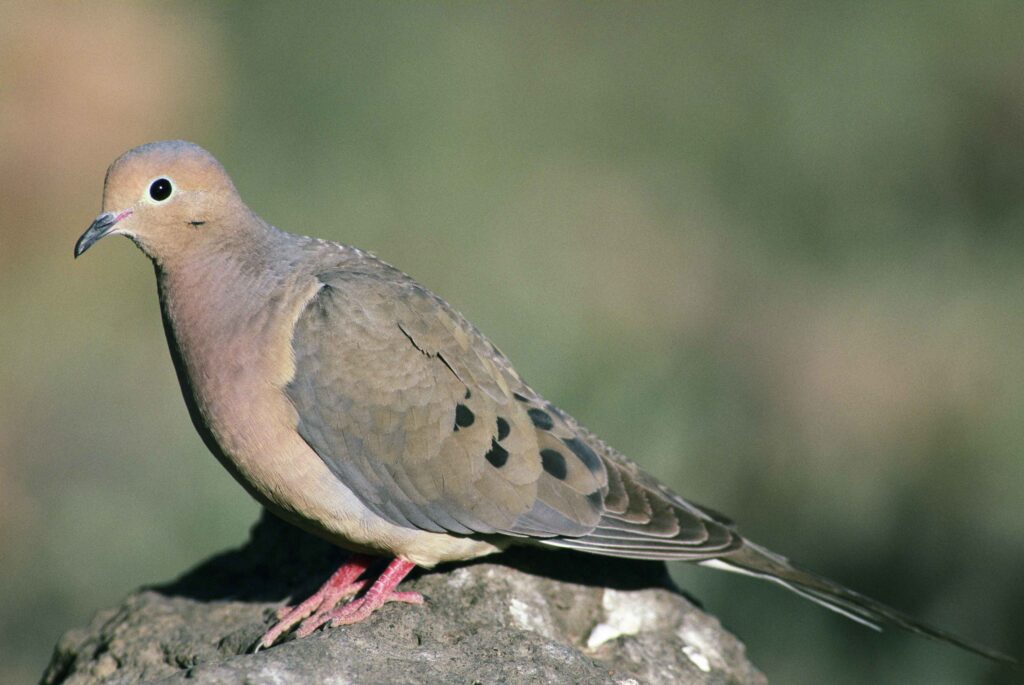
Mourning Dove
The lovely mourning dove has a wingspan between 5.6 and 5.9 inches. They will mainly feed on seeds, as they make up 99% of their diet, and they will rarely feed on insects. As a way to properly digest their food, mourning doves will swallow grit like sand or gravel to help grind up their food. Males have a slightly red hue on their chests, while females have a grey chest.
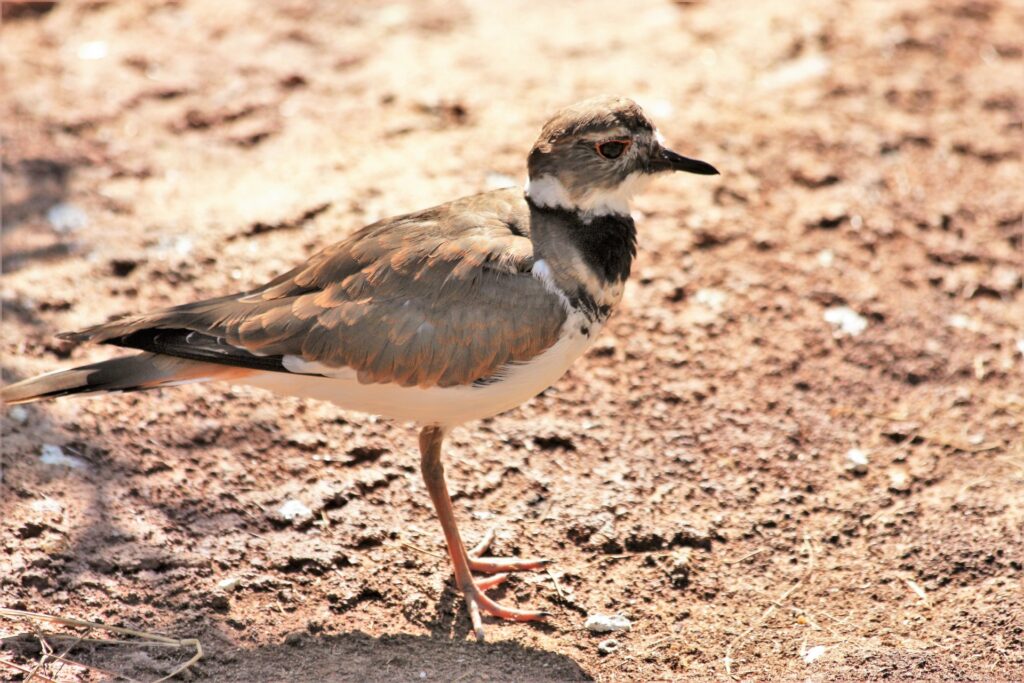
The Killdeer can have wingspans of around 18 and 19 inches in length. They feed mostly on insects like beetles and flies, but on occasion, they will also eat millipedes, worms, snails, spiders, and some seeds. They can be found in many different areas, including marshes, bogs, grasslands, and agricultural areas. Both males and females have the same plumage, so differentiating them can be a challenge, looking at visuals alone.
Killdeer
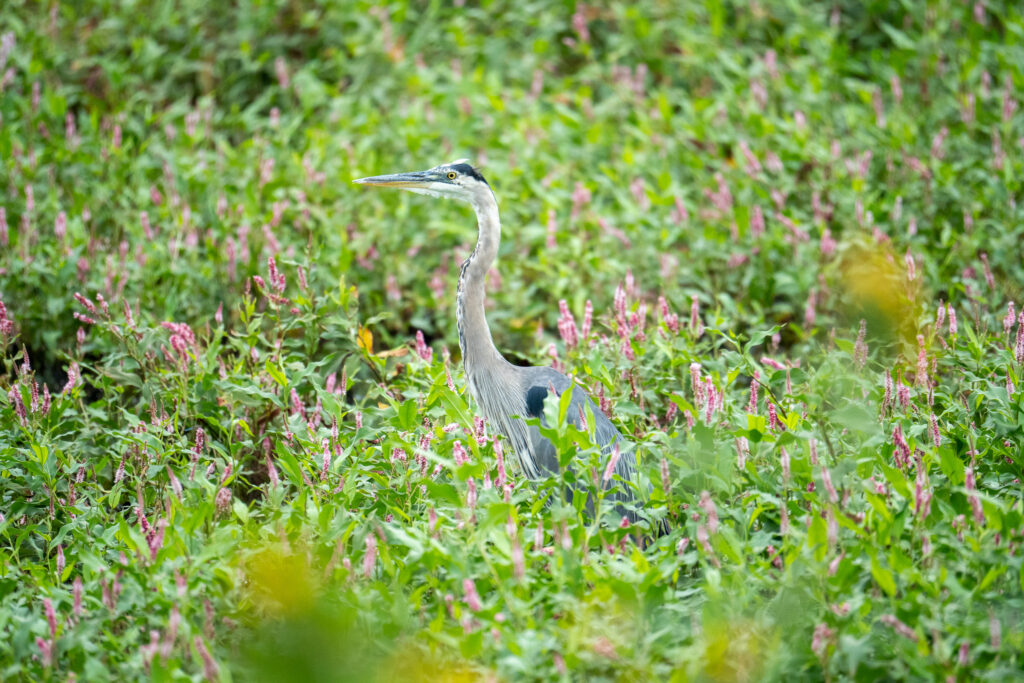
Great Blue Heron
The majestic Great Blue Heron is an astonishing bird with a wingspan of 72 inches, feeding on mostly fish as they hang out near bodies of water. They will also feed on amphibians, reptiles, small birds, and mammals on occasion. You can spot these beautiful birds near bodies of water with plenty of trees and vegetation, like marshes, swamps, beaches, and lakes. To tell females and males apart, it may be a challenge, but side-by-side comparison shows that males tend to be taller and females are more slender.
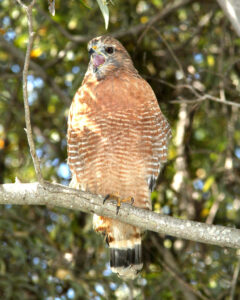
The elite, Red-shouldered Hawk is another bird of prey that resides on Petty’s Island with wingspans ranging between 37 and 44 inches. They will feed on small mammals such as mice, gophers, and chipmunks, larger mammals like rabbits and squirrels, on occasion, amphibians, small reptiles, and fish. They can be found in places like swamps, forests, wetlands, and other wet areas. To identify a male and a female, you have to look closely as in many cases in nature, the female is, about 25 to 30% bigger and the male has brighter plumage.
Red-shouldered Hawk
Savannah Sparrow
The Savannah Sparrow, not to be confused with the House Sparrow, is a small bird with a wingspan of 7.5 to 8 inches. If you look closely, they have yellow on the tops of their head, where House Sparrows do not; they are darker black/brown on the tops of their head. They will feed on seeds mostly in the winter, but will open their diet up to insects and spiders during their mating seasons. It’s tricky to decide whether one is a female or male, but if you look at the picture to the left, the yellow band on female sparrows is not as prominent.
Mammals
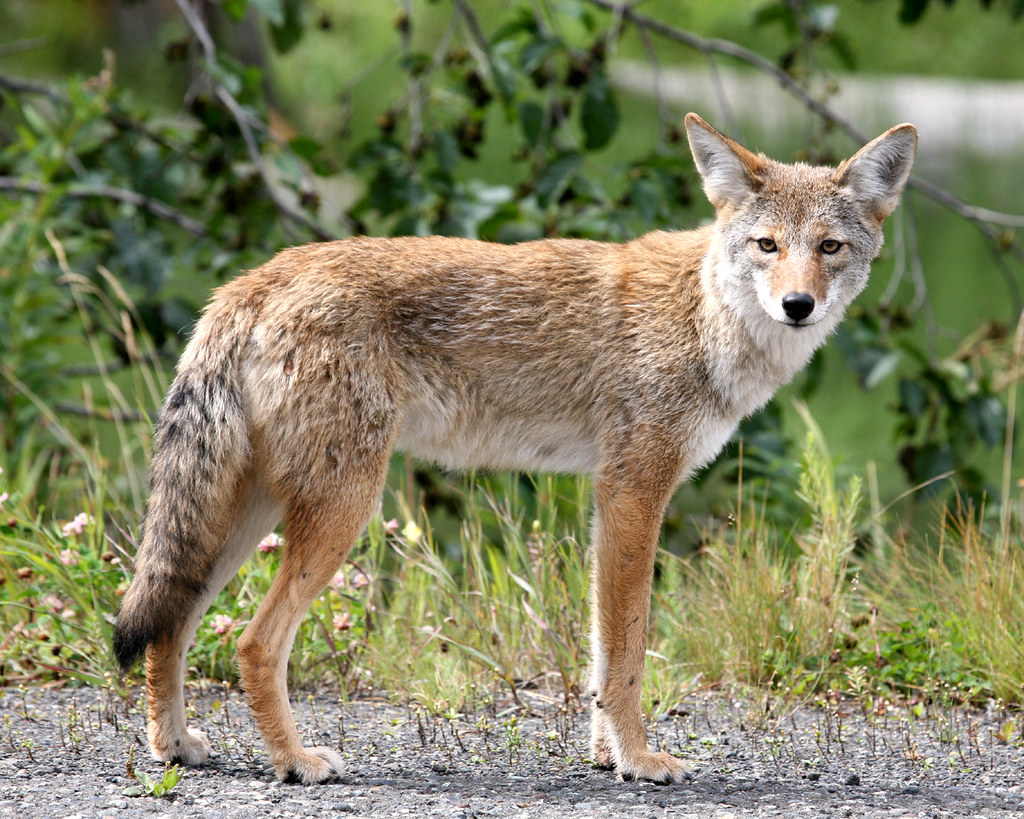
While the Eastern Coyote is not native to New Jersey, it isn’t invasive either. First sighted here in 1939, this Coyote species moved south from the Midwest filling the environmental role left behind by the Grey Wolf. Their diet consists mainly of mice and other rodents, but will occasionally include rabbits, birds, fawns, even nuts and berries if needed! Their fur coats are mainly grey in color, with some displaying greyish brown tones and with lighter tones under their bellies and at their legs. They are most active in the evening and early night, rather than during the day, and will find homes within caves, logs, or abandoned dens of other animals such as foxes or groundhogs, adjusting them to their needs.
Eastern Coyote
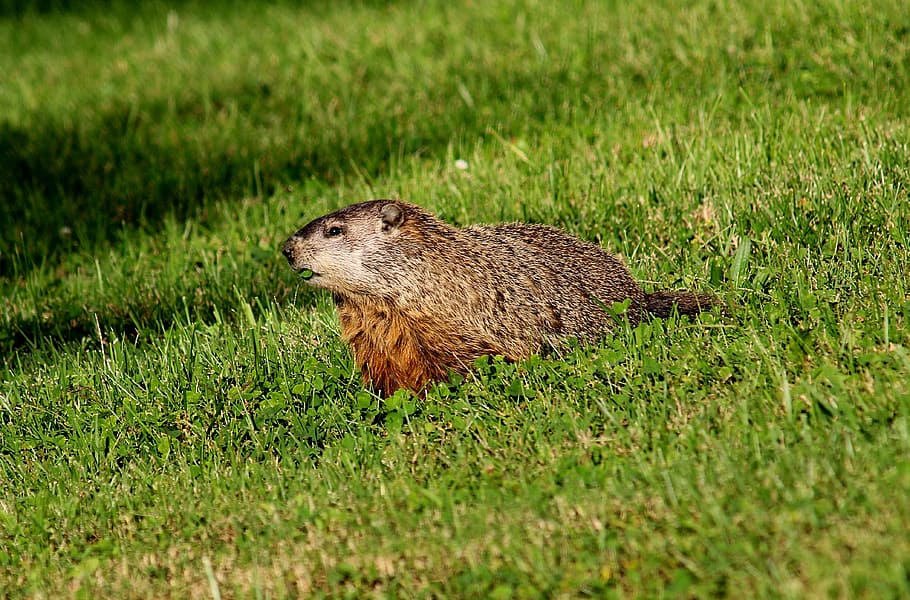
American Groundhog
Groundhogs are our very own ecosystem engineers here in Jersey. Digging burrows underground for their dens and tunnel systems; aerating the soil and cycling the nutrients around them. Sometimes, their burrows may also become homes for future species that come in after the groundhog has left its den. They maintain a herbivorous diet consisting of grasses, nuts, berries, and other vegetation, and on occasion will eat small animals like grubs and grasshoppers. Their diet also aids in wearing down their teeth as they grow year round like other rodents. They can be found in open areas, avoiding swampy land. On Petty’s, you’ll find one of the Groundhog’s entrances along Michaels’ trail.
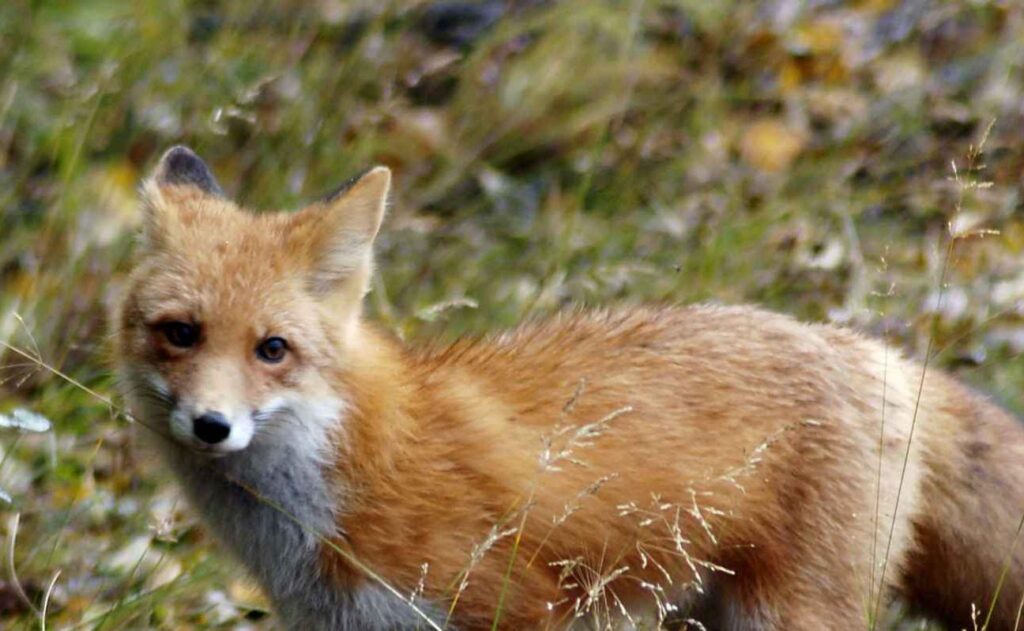
Easily identified by their red coats, these resident foxes aren’t always easy to find on the island without being one step ahead of these sneaky residents. Many generations of Fox packs will usually live in one den, with some foxes leaving as they reach adulthood. They may also have emergency dens to escape to near their dens, pretty smart, right? They will feed on small rodents like mice, moles, squirrels, etc., whilst still hunting for your usual birds, reptiles, and some smaller reptiles. Red Foxes can measure between 17.7 and 35.4 inches in length as they mature, with males being larger than females. They can be found in a wide range of habitats, including grasslands, forests, and deserts.
Red Fox
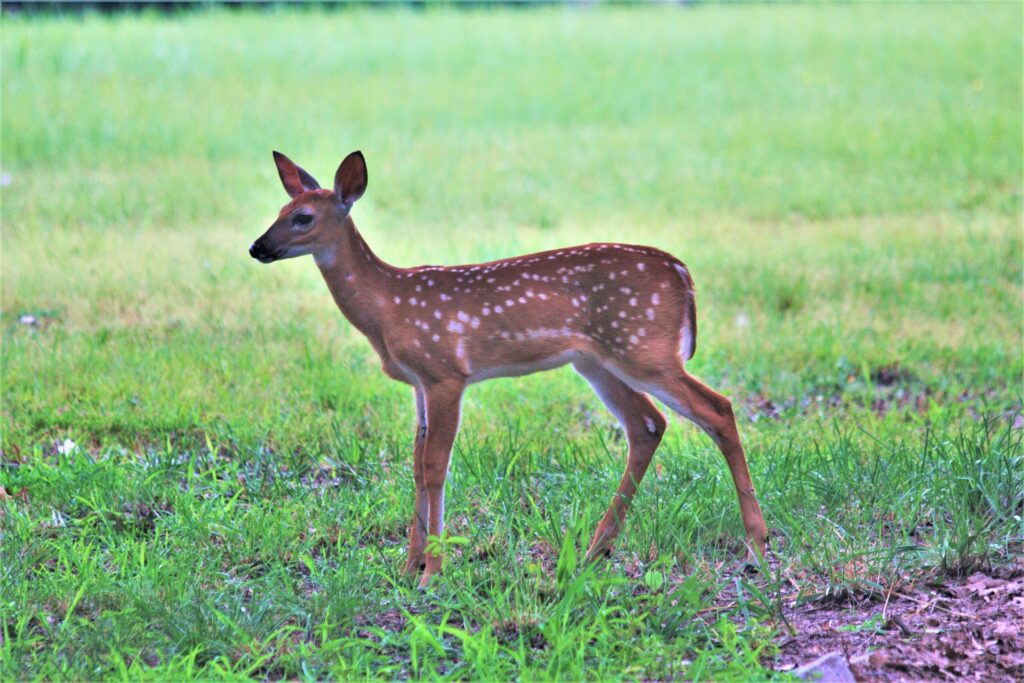
White-tail Deer
The White-tail Deer, our local Bambi, they are easier to spot as they are constantly traveling throughout the island in small groups, sometimes found traveling solo. They’re easily identifiable by the white underside of their tail, which you will get to see very often, as they are the shyest of the deer family, swishing their tail and running away when alerted. They will feed on nuts, berries, fruits, leaves, shrubs, and so much more, allowing them to thrive in Petty’s lush forests and fields. White-tailed deer may reach 5.9 to 8 feet long, with the ability to jump distances of up to 30 feet! These adorable animals can be found in grasslands, forests, woodlands, and mountains.
The White-footed Mouse is a fairly small rodent that lives a generally solitary life, yet with their good hearing, vision, and sense of smell, they thrive in areas like forests, grasslands, and shrublands. They are nocturnal, so they normally only come out at night; however, their homing skills allow them to find their way back home of up to about 2 miles away. They can reach sizes between 3.5 to about 4 inches. Their diet consists of nuts, buds, flowers, tons of oak and hickory bark, along with other crops like corn and wheat.
White-footed Mouse
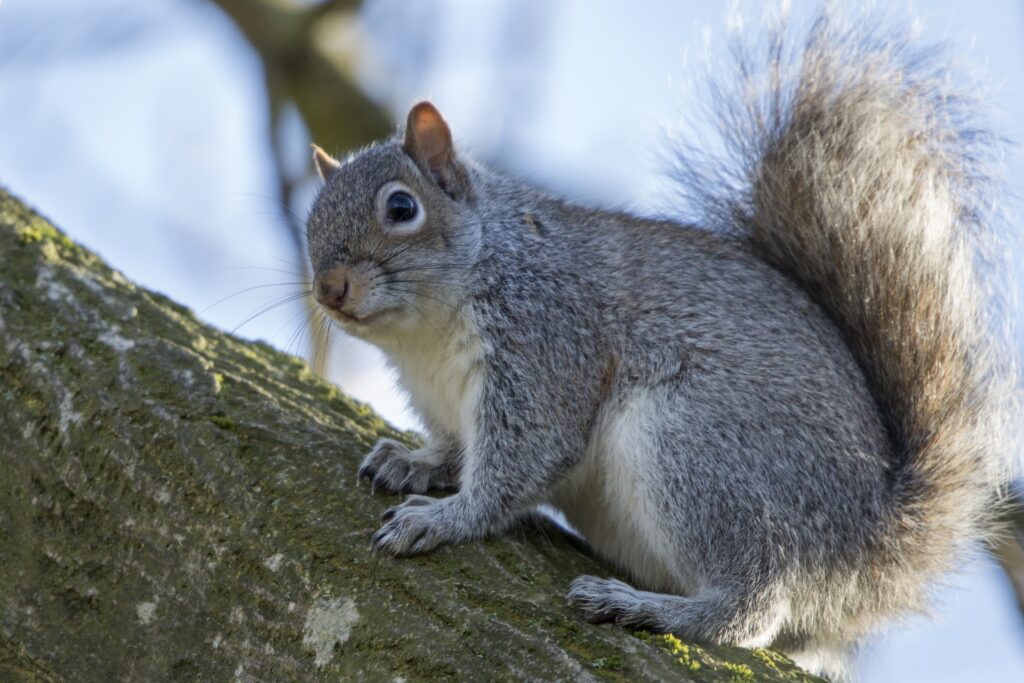
Eastern Gray Squirrel
You’ve never seen a hoarder like these squirrels before. They are known for hoarding large amounts of food for the future. Instead of hibernating, the Eastern Gray Squirrel will remain active during the colder months, relying on its stored food during these food-scarce months. They will eat the flowers, nuts, and buds from a variety of Oak, Hickory, Beech, and Walnut tree species. On occasion, these squirrels will share dens in the colder months. They will reach sizes between 9 and 11.8 inches, and live between 12 and 20 years!
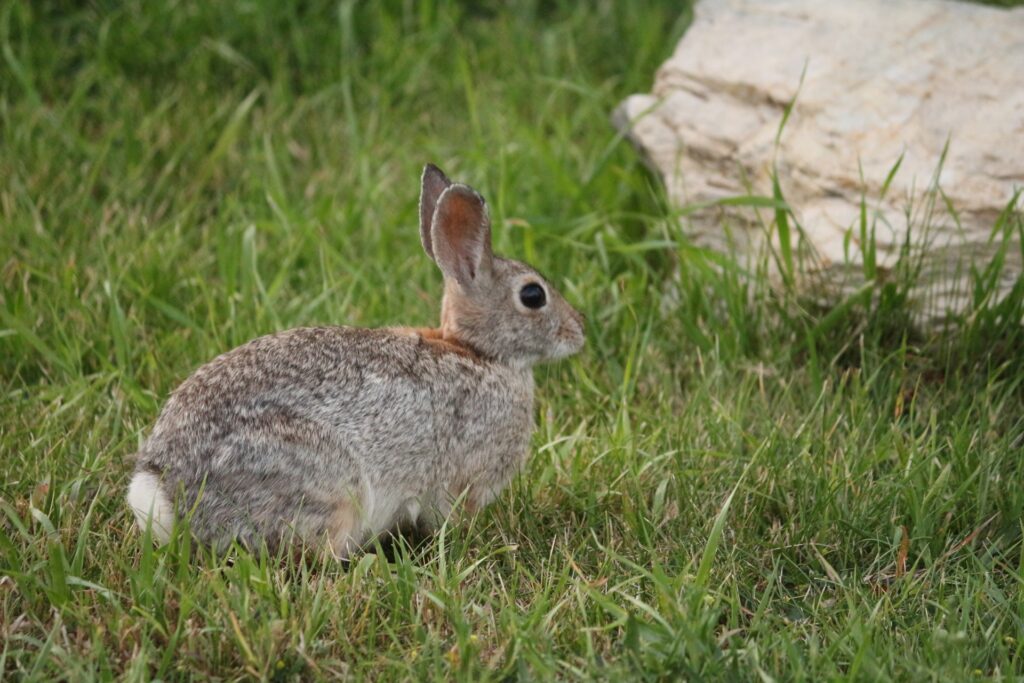
The Eastern Cottontail is a solitary animal that usually stays in one area throughout their lifetime, contrary to popular belief, they don’t dig burrows; rather, they rest in patches of grass that dip slightly down into the ground or under bushes. They are most active during the day but are great escapist, running in zig zag patterns and finding great hiding spots to evade predators or any other threats. They can get to be anywhere between 14 to 19 inches in length as they grow and will feed on vegetation mostly as they are herbivores, this includes clovers, dandelions, chickweed, and much more. Places with tons of vegetation and great hiding spots are where you’ll find these creatures, such as forests, grasslands, and woodlands.
Eastern Cottontail
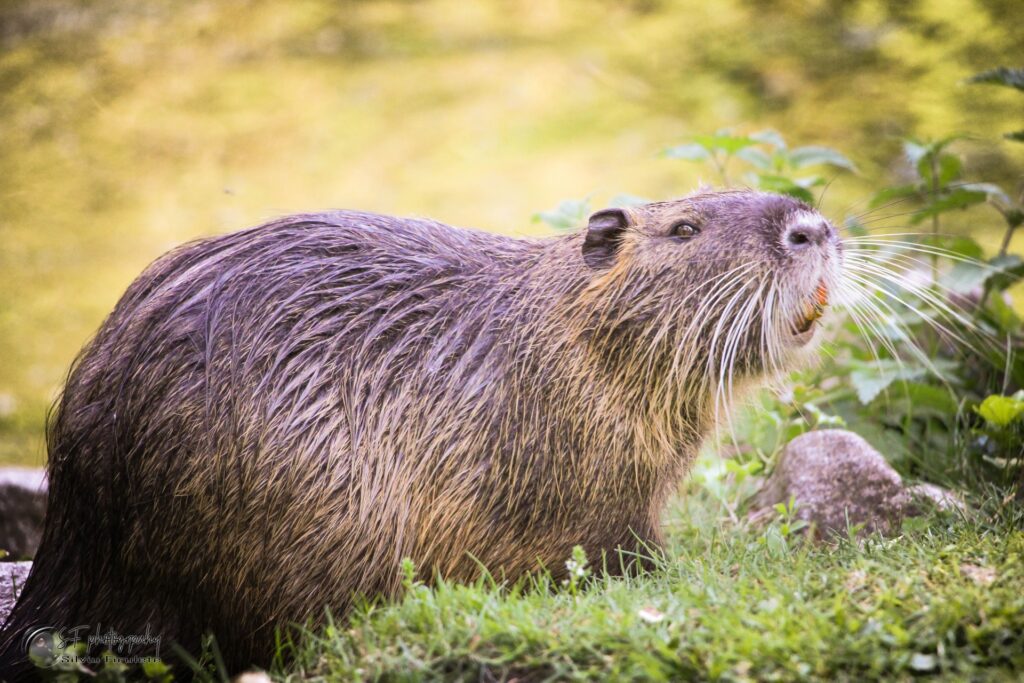
Beaver
While Beavers have not explicitly been spotted on the island, there is plenty of evidence of them in the form of bitten trees with tooth marks at the base, where a significant chunk of trees are cut out. They usually get to be around 35 inches in length, feeding on the bark of trees, specifically eating the cambium, the inner layer under the bark. They can be found in groups of around 8 members strong, living very social lives. They have been found to build small canals to help them transport food back to their shelters, as well as store food away for future use. They are usually found near rivers, wetlands, forests, and similar habitats, but can still be hard to spot as they are great at hiding away especially in their expertly build shelters.
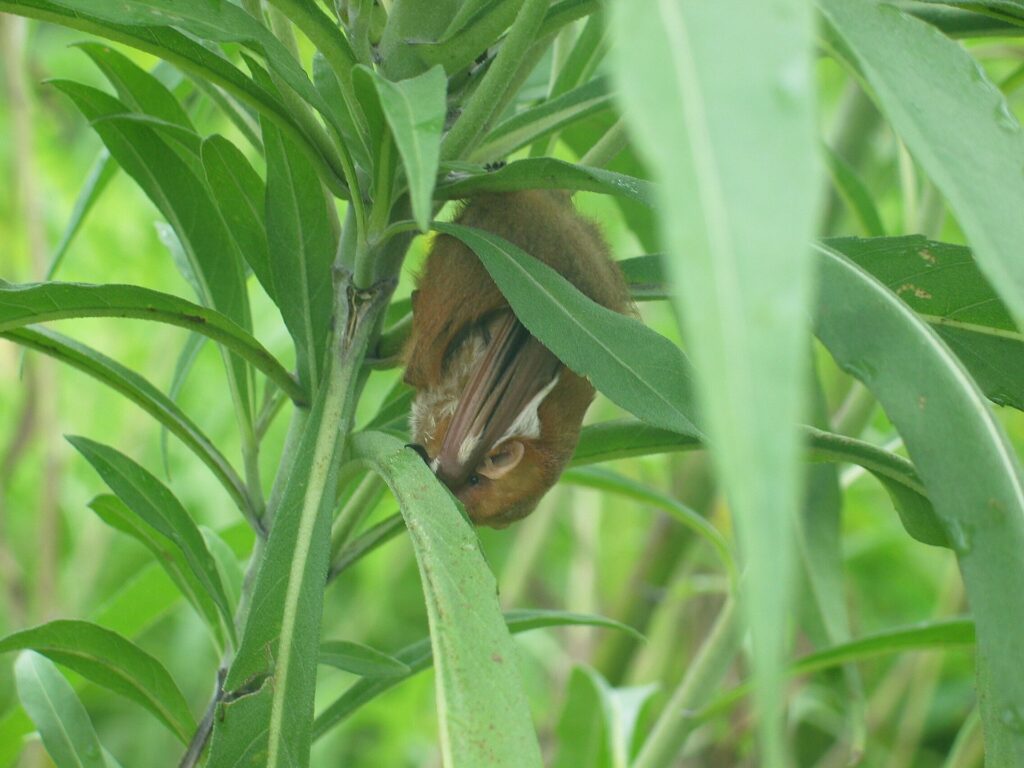
The Eastern Red Bat is one of two bats found on the island. They share a similar diet to the little brown bat in that they only eat insects, including mosquitoes, moths, and flies. However, they are smaller with wingspans only reaching as long as 4 inches. They are nocturnal and will spend the day resting or hanging off branches before flying off in the night to hunt. During the cold winter months, they will also enter hibernation instead of migrating south like other red bat species. They are important in controlling insect populations, especially on a diverse island like Pettys.
Eastern Red Bat
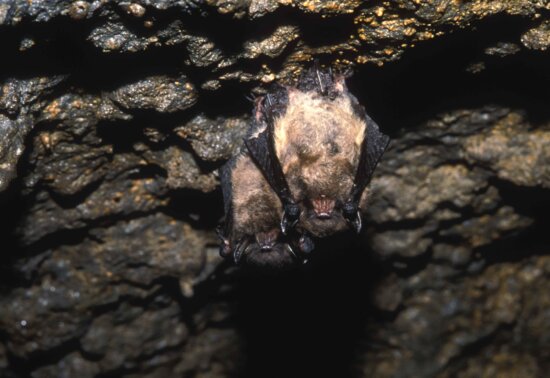
Little Brown Bat
The Little Brown Bat, while it may seem frightening, trust me when I say it’s the opposite. They can be found in caves, forests, and other urban grasslands. They are medium-sized with a wingspan of a little over 10.5 inches. These small creatures are mainly active after dusk or before dawn. Meanwhile, during the day, they enter torpor, a state of inactivity. During the winter months, they will enter hibernation, with younger bats entering later than older bats as they require more food. These guys are insectivores, which means they feast on insects like mosquitoes, caddisflies, beetles, and occasionally spiders, which aren’t insects; they are arachnids.
Reptiles
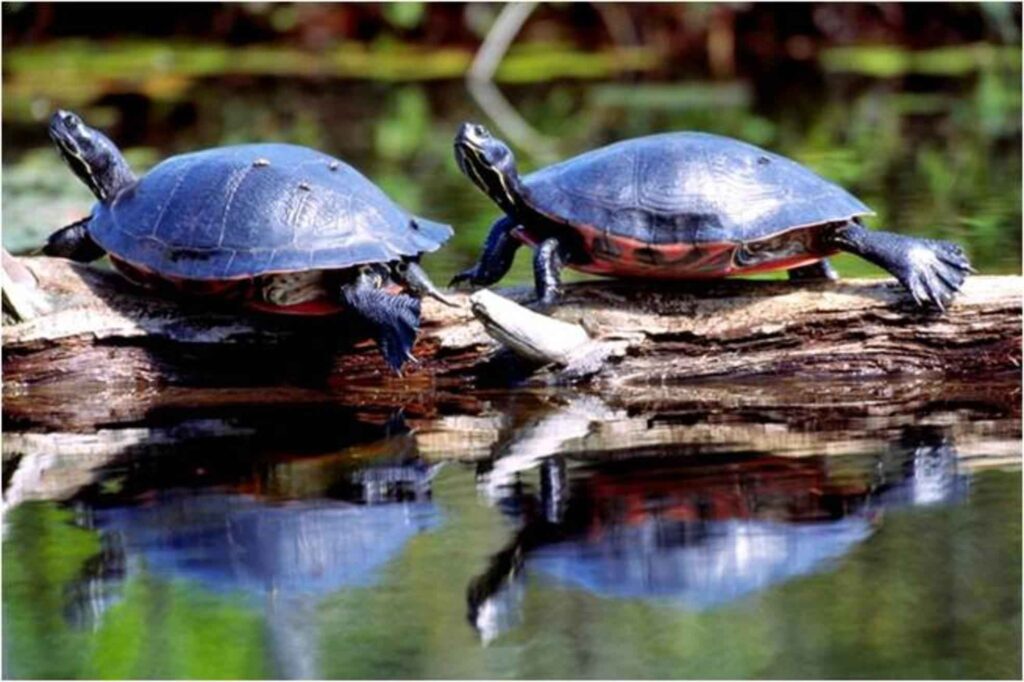
The Northern Red-Bellied Cooter can be found near the coastal areas of New Jersey, Pennsylvania, North Carolina, and up to Massachusetts. They are usually found in deep freshwater rivers, lakes, and wetlands. Juveniles are usually found in smaller bodies of water like ponds, swamps, and creeks. These herbivores will feed mainly on aquatic vegetation, but can sometimes be found eating crayfish and smaller invertebrates. During the colder winter months, they will bury themselves in the mud and enter a state of brumation, or they may be hiding from predators! They can grow from 11.8 inches to 15.7 inches and live past 50 years.
Northern Red-Bellied Cooter
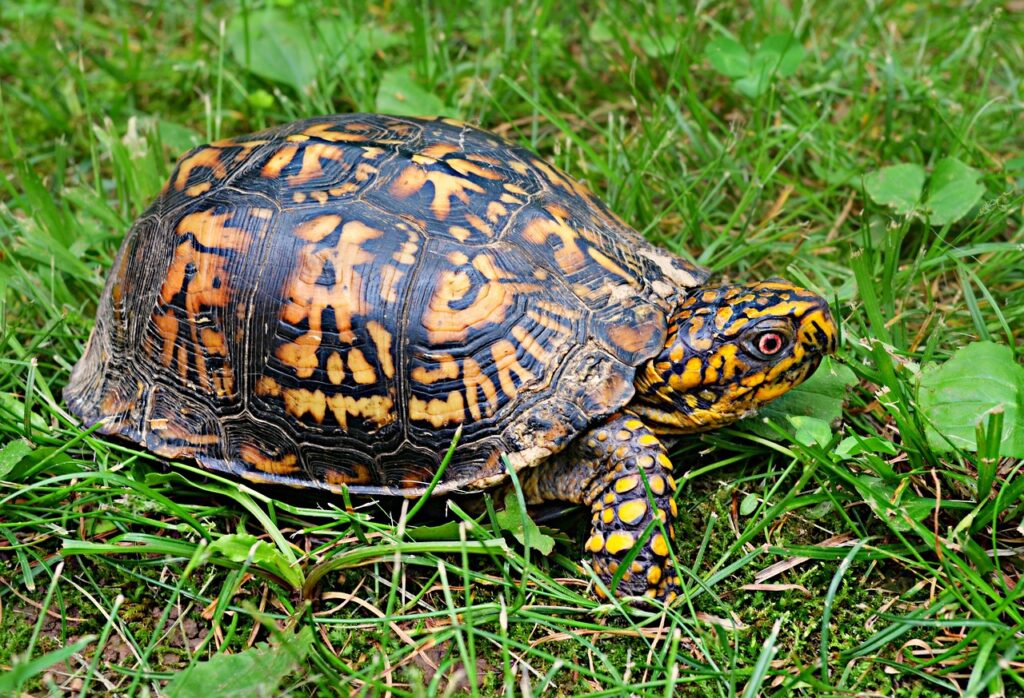
Eastern Box Turtle
Eastern Box Turtles get their name from their ability to pull themselves into their shell and close up like a box! They have a hinged belly, called the plastron, that will close when they fully retract back into their shell. Males typically have red eyes, while females usually have brown eyes. They can be found mainly in the eastern United States, from as far north as Maine and Michigan to further down south in Florida, and in surrounding states like Louisiana and Texas. In the Southern regions where the temperature is hotter, they may use the mud to cool off by submerging themselves. However, in the Northern states where it’s colder, they may enter a state called brumation, where they will shut down to save energy, not eating, moving, for weeks at a time. They can get between 5.1 to 5.9 inches, feeding on a variety of plants and animals like earthworms, beetles, snails, slugs, and caterpillars.
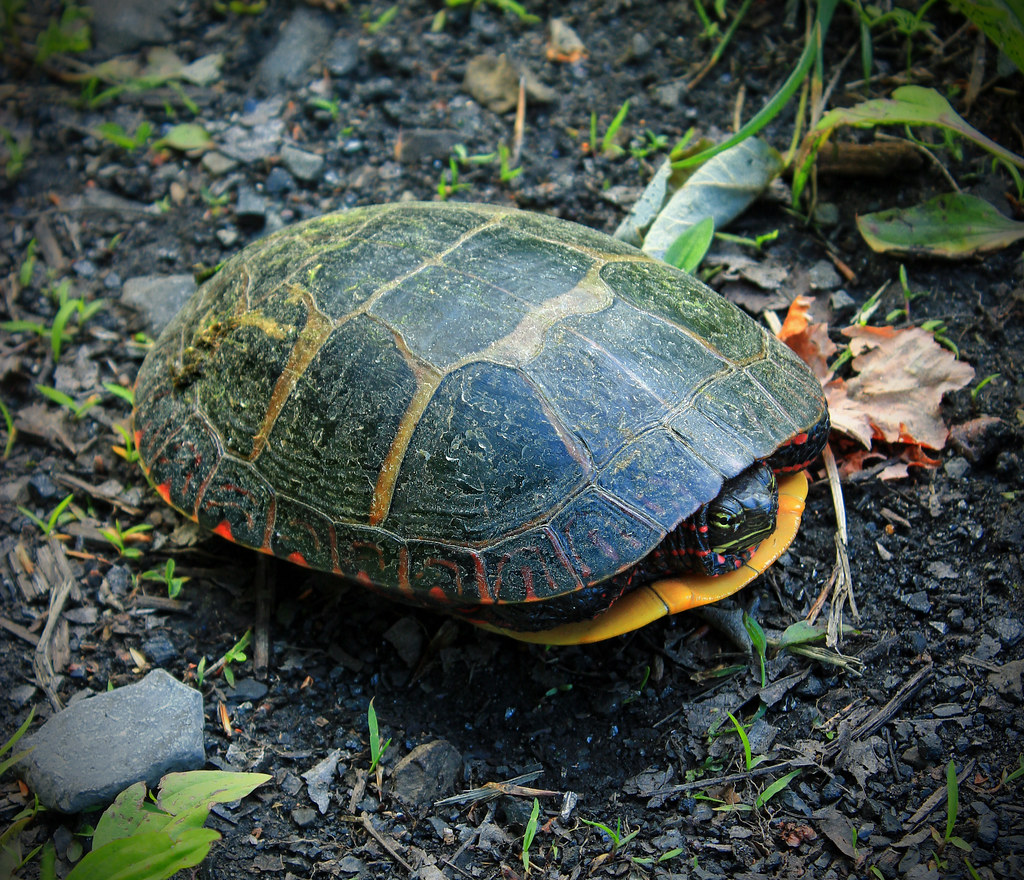
The Eastern Painted Turtle is best identified by its red and yellow stripes on its neck, legs, and tail with its distinct head that has only yellow stripes. They are native to North America, ranging from Mexico to Canada, and mainly Northern States. Their usual habitats are found near bodies of water, where they can live their semi-aquatic life, such as rivers, marshes, lakes, and bogs. Their cold-blooded lifestyle requires them to emerge into the sunlight to warm up before starting their day. They will spend time foraging in the water before emerging once more to bask; they will repeat this several times during their day. These turtles are omnivores, meaning they will eat both animals and plants. These include aquatic vegetation, insects, algae, fish, and crustaceans. They can reach sizes from anywhere as small as 3 inches to around 9.8 inches.
Eastern Painted Turtle
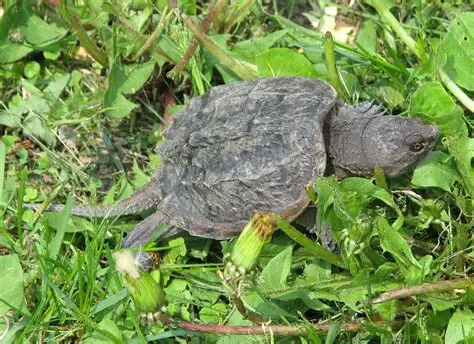
Common Snapping Turtle
The Common Snapping Turtle is easily identified by their large size and rigid upper shell, their carapace. These bulky fellas inhabit a large range from southern Canada, the edge of the Rocky Mountains, all the way down to Florida, living in rivers, marshes, and ponds. They are ambush predators and will bury themselves with mud, leaving only their nostrils and eyes exposed, luring in prey with their tongue acting as a worm lure. They are omnivores, so plants are part of their diet, but they also feed on many invertebrates, including fish, frogs, reptiles-including smaller snakes and turtles, smaller birds, and mammals as well. They can get anywhere between 9.8 inches to 18.5 inches and as heavy as 35 pounds! and as light as 10 pounds.
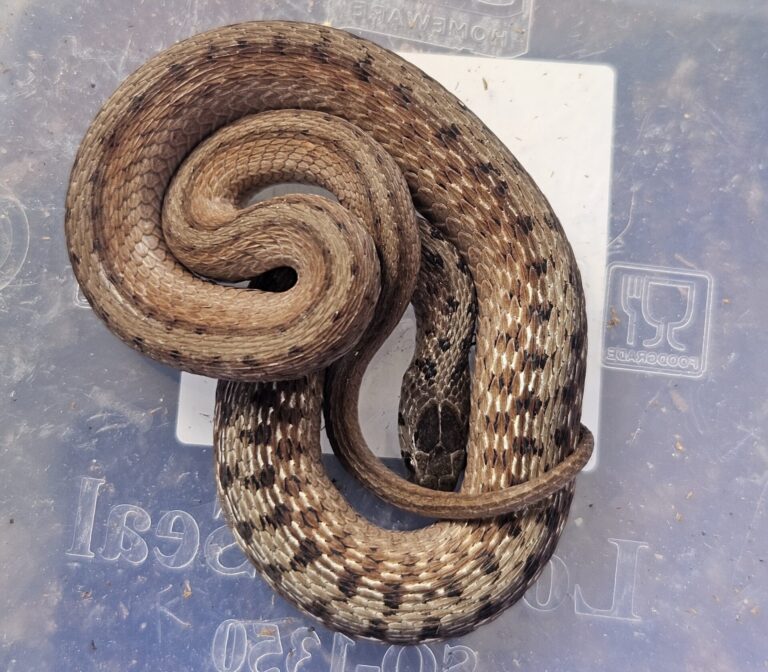
The Northern Brown Snake, also known as DeKay’s snake, is a beautiful snake that can reach sizes between 9 to 20.75 inches. They will inhabit dense woods, marshes, and meadows, usually staying low to the ground under the shrubs. They will feed mainly on invertebrates, including insects, worms, on occasion small fish, and frogs. They are nonvenomous snakes that, during the summer, will adopt a nocturnal lifestyle to escape the summer heat, staying near water where their excellent swimming abilities help them hunt for food.
Northern Brown Snake
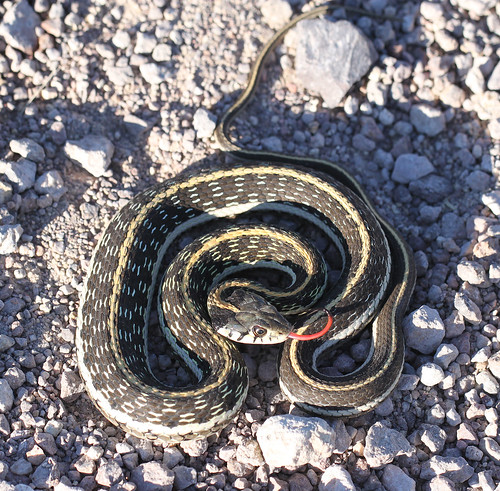
Eastern Garter Snake
The Eastern Garter Snake is easily identified by its yellow stripes along its dark body. These small guys can reach sizes between 18 and 26 inches. They are non-venomous snakes; however, they still have small rows of teeth to grab on to their prey. Their prey consists of toads, frogs, and mostly anything they can take down. They are usually found in forests, grass or shrublands, and sometimes in areas like abandoned farms. They will find refuge under logs or anywhere they can bask and quickly retreat from predators. They live mainly solitary lives but will gather in large groups when going into brumation. They brumate in large groups during the winter, sometimes taking shelter in abandoned burrows.
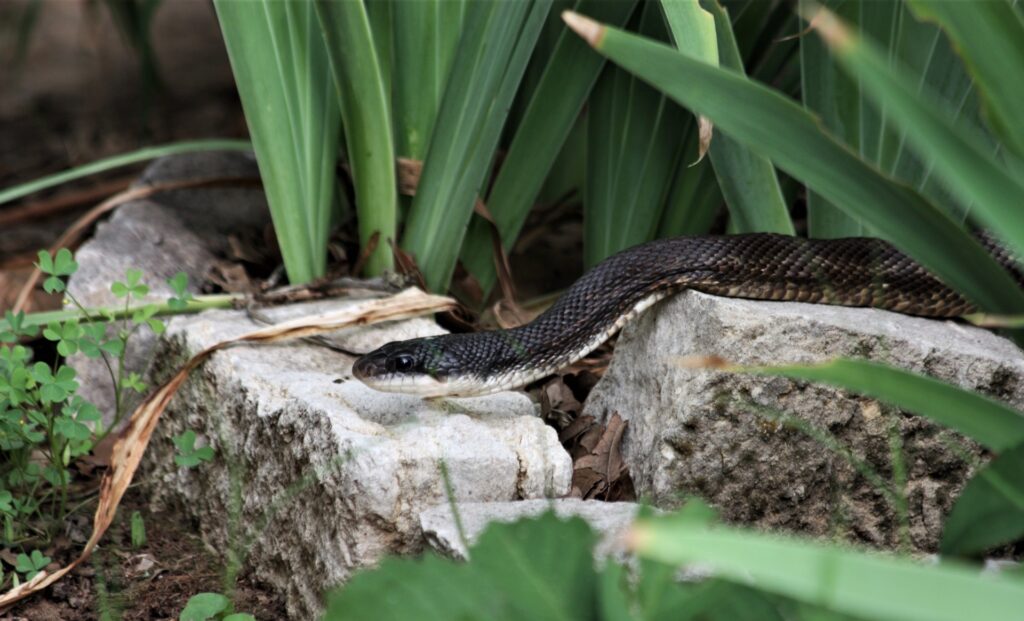
The Black Rat Snake is a non-venomous snake that lives on the East Coast of the United States, found in forests, plains, grasslands, farmlands, and other similar areas. They will find shelter under logs, boards, in trees; they are great climbers and burrowers, and may even head into the water. Although they are solitary, they may share dens with other snakes like copperheads or timber rattlesnakes. They will eat rodents, lizards, frogs, birds, and their eggs. Although they may not be large predators, they can reach sizes between 3 and 5.9 feet.
Black Rat Snake
Amphibians
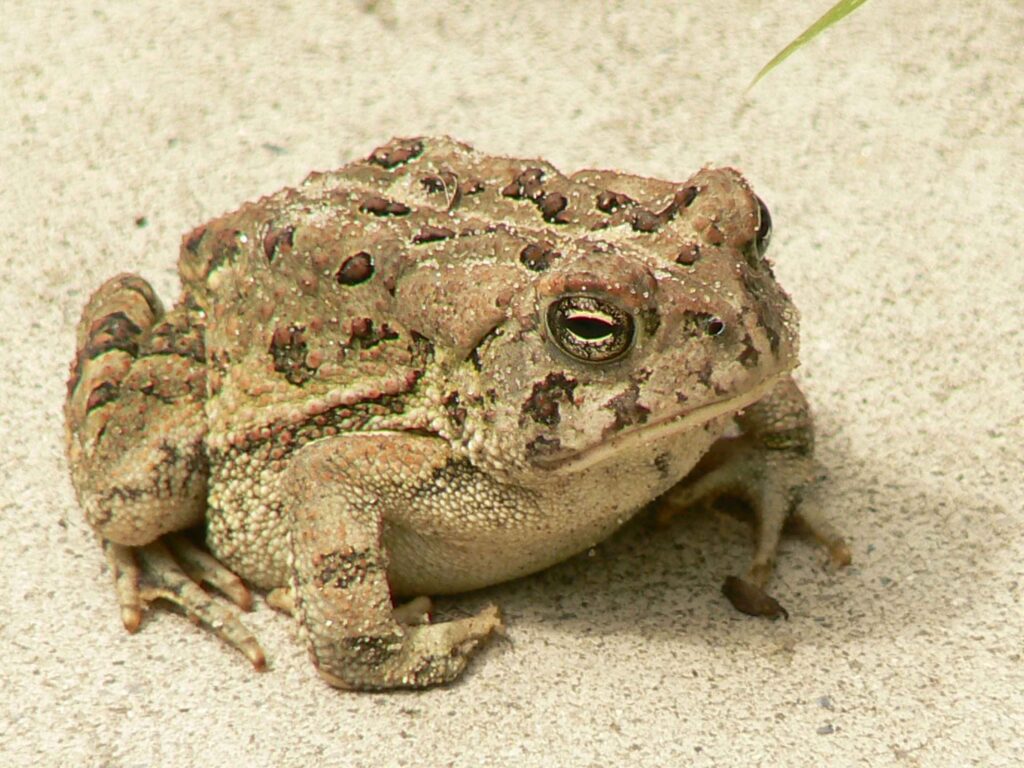
Fowlers Toad
The Fowlers Toad is popular amongst the amphibian family on Petty’s. They are easy to spot as they love to spend time under short vegetation, such as the grass along and on trails. They are found mainly in the eastern United States in forests, wetlands, grasslands, and other places near water with ample forested cover. Although they are food for snakes, small mammals, and birds, their brown coloration and markings help them blend into their surroundings. Along with a distasteful compound released by warts on its back meant to ward off predators. They will feed on insects and smaller invertebrates, the craziest being the velvet ant, which packs a punch with its stinger to humans, but does nothing to the toad. They can reach sizes between 2 and 3.5 inches.
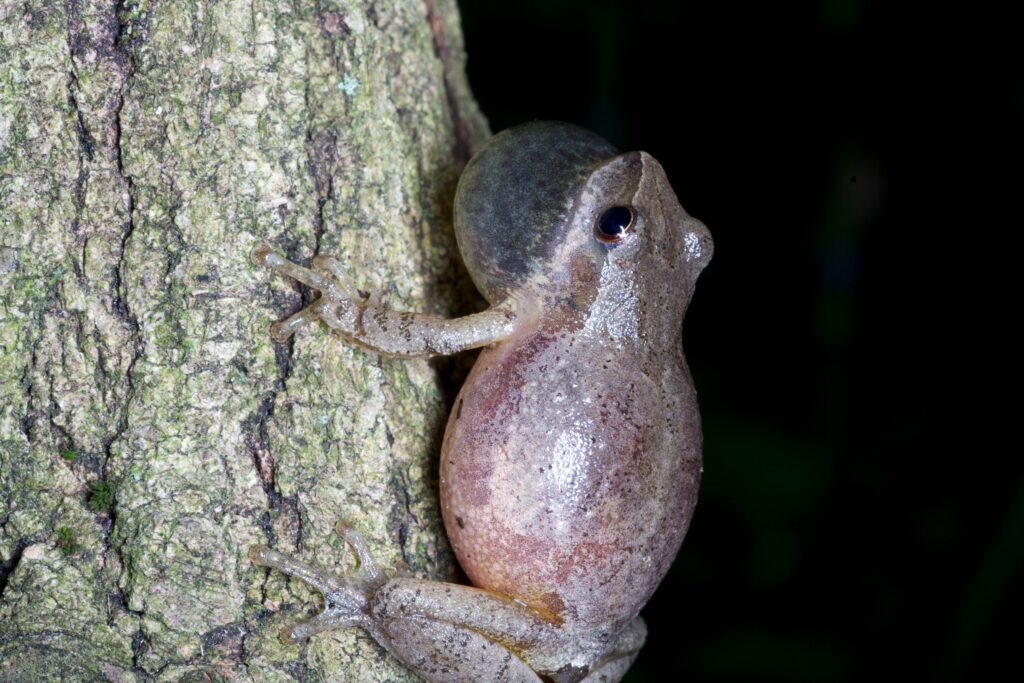
Northern Spring Peeper reaches a size of just nearly an inch. They are sometimes identified by a mark that resembles an X on their backside. They can be found mainly east of the Mississippi. They can be spotted in caves, lakes, forests, and places alike as long as the aquatic environment needed for their eggs to thrive is around. Feeding on smaller invertebrates like flies, beetles, ants, and spiders. They stay low to the ground, foraging in the vegetation.
Northern Spring Peeper
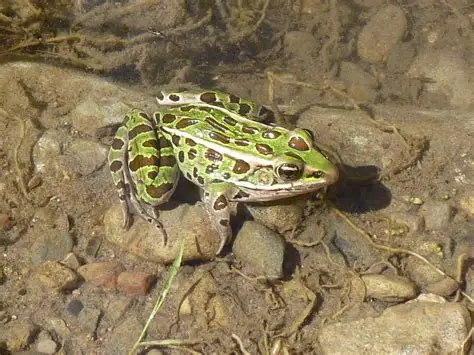
Leopard Frog
This Leopard Frog is considered the Atlantic Coast Leopard Frog, as it’s found on the Northeastern Coast of the United States. They are commonly found in the wetland habitat with an abundance of insects. The Leopard Frog feeds mainly on grasshoppers and crickets but may also eat worms. These small creatures will reach sizes between 2.4 and 4 inches. Their nocturnal lifestyle leads to their active hunting during the night, and mating in groups, usually drifting in the current.
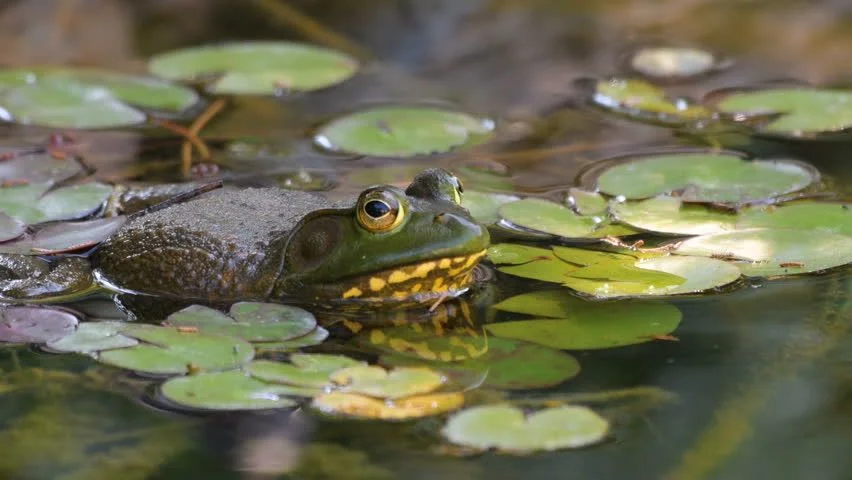
The American Bullfrog is commonly found in the Eastern United States, normally near bodies of water in areas like marshes, swamps, and lakes. These frogs are usually very territorial, showing social dominance in their posture. Territorial Frogs have inflated postures, while non-territorial frogs stay in the water with only their heads showing. On average, they reach sizes of 18 inches in length and will eat just about anything they can overpower. Bullfrogs have been found to eat small rodents, snakes, lizards, smaller frogs, even small birds, and crayfish.
American Bullfrog
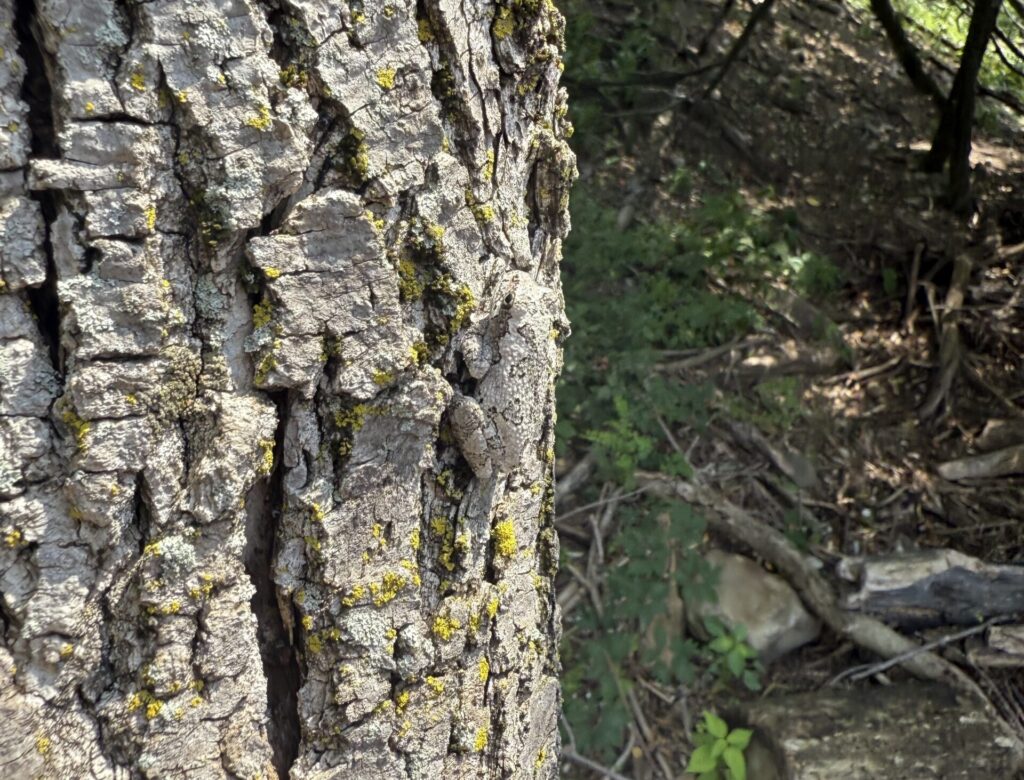
Eastern Gray Tree Frog
Can you see him? Look closer! These Tree Frogs are masters at hiding, which they will need when they average 1.25 and 2.5 inches in size and have to evade predators. The Gray Tree Frog is commonly found in the Eastern United States, mostly in wooded areas near bodies of water. They wait until night to come out and hunt, making them nocturnal. They’re insectivores, which means they only feed on insects like beetles and crickets. Their toe pads produce an adhesive mucus that allows them to climb trees, walls, and most surfaces while hunting or evading predators.
Insects
The Eastern Bumblebee is not as scary as many people may think! These incredible little animals are pollinators for our flowers, fruits, and vegetables, including tomatoes, blueberries, peppers, melons, and so much more, making them an important part of their ecosystems. The hair on their bodies helps carry the pollen they collect as they travel from plant to plant. As implied in their names, they are found mainly on the East Coast. These tiny bees average between 17 and 21 millimeters in length. Unlike the Honeybee, Bumblebees don’t produce as much honey; this is due mostly to their smaller colony size, as bumblebee colonies are only around 150 to 300 bees strong, producing only a few grams a day, enough for their hive. For reference, a Honeybee colony has 60,000 at its peak.
Eastern Bumblebee
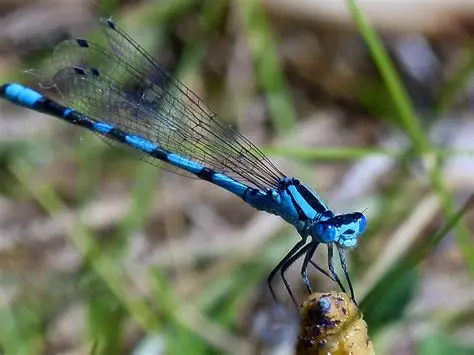
Blue Dasher
The Blue Dasher may be hard to spot as they are fast fliers, reaching around 30 mph when flying, and on average beating their wings 30 times a minute. These small dragonflies can reach anywhere between 35 and 45 millimeters while feeding on mosquitoes and mayfly larvae, thousands per day. They can be found mainly near lakes, ponds, and marshes, usually surrounding a body of water. While adult males display a beautiful blue coat, young Dashers will not display these colors, maintaining yellow and green stripes instead. Females will also appear different, being more rustic in color and brown throat with a more blue-grey underbelly. They can stay in their nymph stage for as long as 4 years to fully develop and take flight.
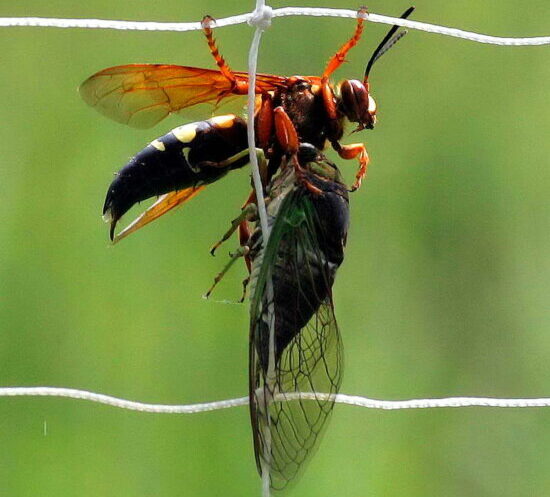
Eastern Cicada Killers can range between 1 to 1.75 inches in length, males ranging from 1 and 1.25, and females being larger. Surprisingly so, adult Cicada Killers do not eat cicadas; they feed on nectar and plant fluids. It is the larvae that need cicadas to live. Adult cicada killers will straddle the cicada, carrying it back to their burrow where they sting it, paralyze and feed it to the larvae. The cicadas are crucial to fulfilling the nutritional needs of the larvae, specifically female larvae that require more nutrients to bear eggs. They are usually found in sandy habitats where there is little vegetation and are active mainly in the summer before caccooning and surviving during the winter.
Eastern Cicada Killer
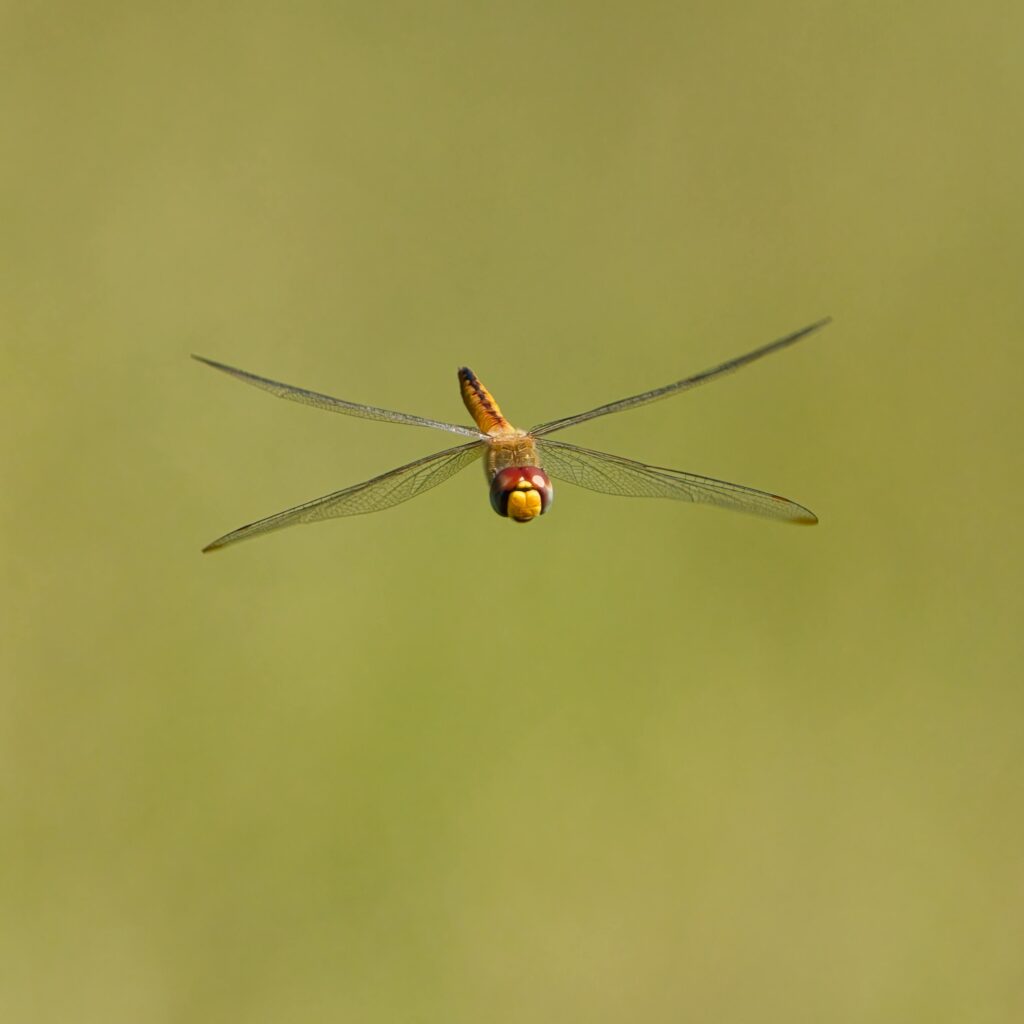
Wandering Glider
Wandering gliders are found near bodies of water, like most dragonflies, such as rivers, lakes, and swamps. They will feed on aquatic invertebrates like shrimp and some larvae; in some cases, they may feed on tadpoles too. They can become as long as 53 millimeters and are found virtually all over the world except Antarctica. These gliders will stay in their nymph stage between 38 and 65 days to fully develop their wings before taking flight.
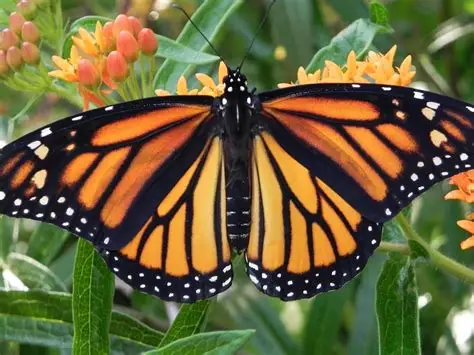
The Monarch Butterfly, while beautiful, is poisonous to its predators if ingested. Their bright orange wings with black veins warn predators of their distasteful nature, but they don’t become toxic on their own. A Monarch Butterfly’s favorite food is milkweed, a common plant that contains a toxic compound. While these butterflies are feeding on milkweeds and feeding their young larvae, they become distasteful and absorb the toxic trait from the milkweed. Once their caterpillar form grows to about 2 feet, they will crystallize before emerging as butterflies, usually with about 4-inch wingspans.